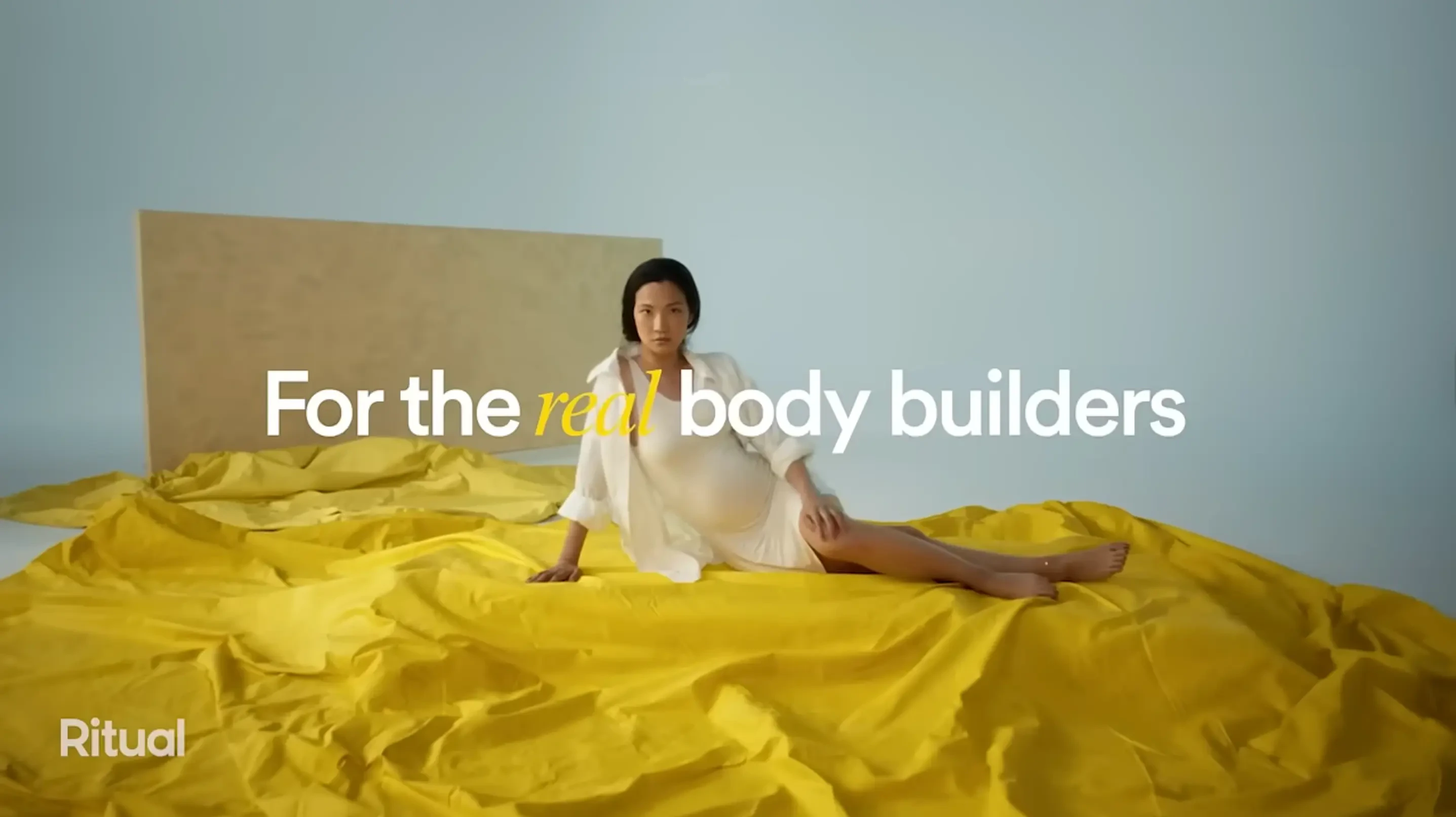
Katerina Schneider is pregnant. Her husband just lost his job. Money is tight. She walks into a pharmacy and can’t find a single vitamin she actually trusts. The shelves are packed with bottles listing 30 ingredients and zero transparency about what’s actually inside.
We are SIRKA – a full-cycle DTC agency
RITUAL: How a Vitamin Brand Built a $250M Empire From 9 Ingredients and a Scandal
Time to read:
13 min
Publication date:
March 22, 2026
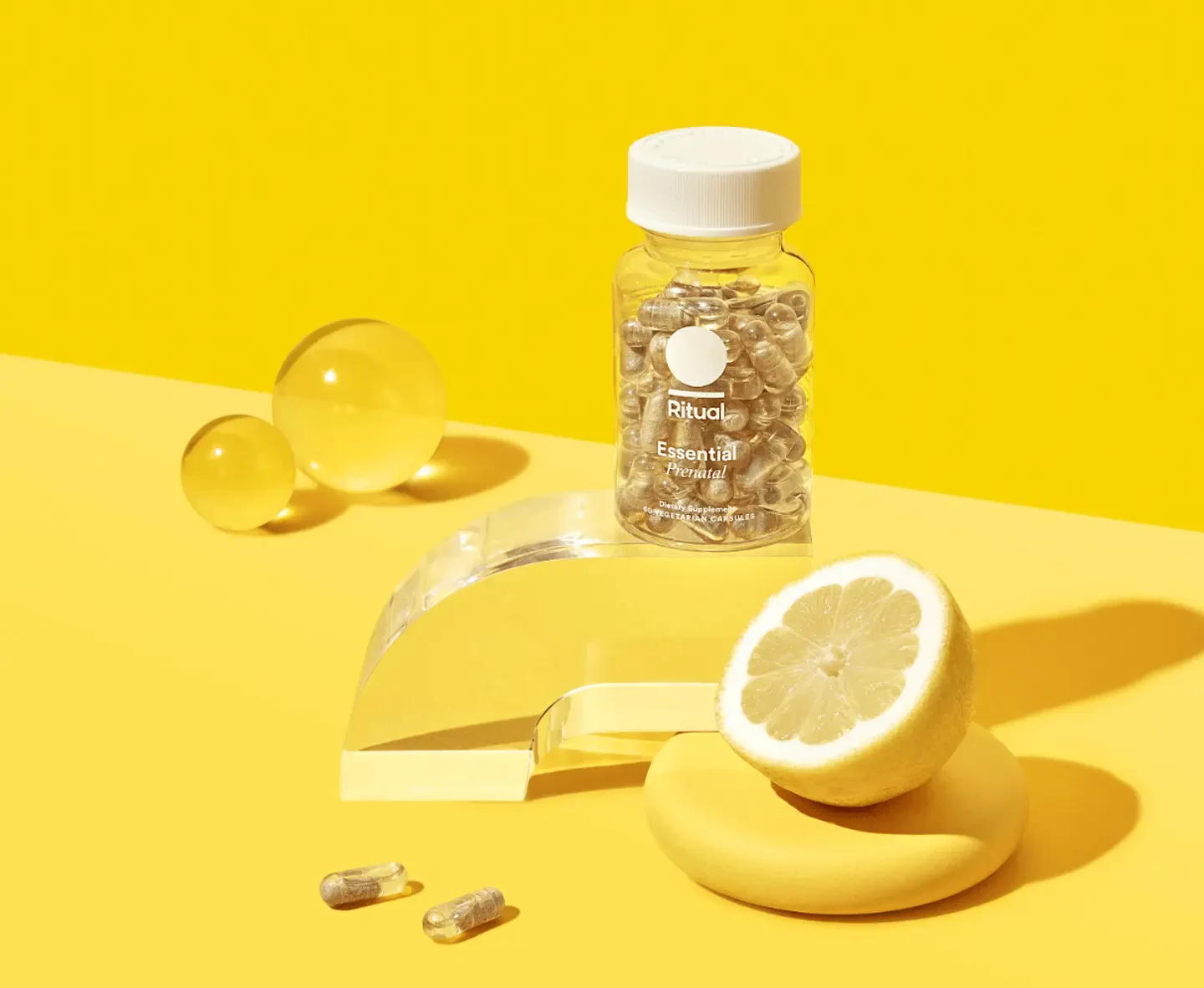
That frustration gave birth to Ritual – a brand that in 10 years hit $250M in annual revenue, 2 million customers, and Walmart shelves. Here’s a breakdown of how they did it.
Key numbers
- 2015 — Year founded
- 1 — First product remained the only one for 2 full years
- 19 — Products in the lineup at the time of this article
- $1.5M — Seed round
- $40.5M — Total funding raised
- $250M+ — Annual revenue in 2024
- 2M+ — Active customers
- 25M+ — Bottles sold all-time
- 92% — Repeat purchase rate
- $5M — Invested in clinical research
1. Launching a Business at "The Worst Moment in Life"
Katerina is the daughter of Ukrainian immigrants. Before Ritual, she worked at Collaborative Fund, a venture capital firm – so she knew exactly how the startup world worked.
In June 2015, with an MVP of her first product, she raised a $1.5M seed round. In October 2016, she closed another $3.5M from the all-women VC firm Forerunner Ventures (Ritual is a women-led business: about 75% of the board and 60% of the full team are women). By 2019, the company had raised a total of $40.5M, including a $25M Series B.
2. Taking On the Entire Industry
Ritual's research team analyzed 12,000+ scientific studies to identify the key nutrients that are truly critical for women. The answer? Just 9 nutrients.
Their first product, Essential for Women, contains only those: Folate, Omega-3 DHA, Vitamin B12, Vitamin D, Iron, Vitamin K2, Boron, Vitamin E, and Magnesium. Each in bioavailable form, with full transparency on ingredient sourcing. The minimalist formula was a direct challenge to an industry that hid behind long ingredient lists.
The physical embodiment of this philosophy: a transparent capsule with Beadlet-in-Oil technology – you can see the tiny ingredient beads suspended in oil. As Schneider said at launch: “Future of health is clear.”
A detail nobody talks about: every bottle includes a mint tab – a scented insert that masks the unpleasant smell of Omega-3 oils. Instead of hiding the problem in the formula, Ritual acknowledged it and solved it elegantly.
Tech detail: the capsule features a patented delayed-release technology. It dissolves in the small intestine, not the stomach – eliminating the nausea and fishy aftertaste that often puts people off fish oil supplements.
3. Branding as a Cohesive System, Not Just Pretty Visuals
Creative Director Michelle Mattar was handed a non-trivial challenge: look best-in-class in a category dominated by design chaos. If you looked at a vitamin shelf in 2015-2016, it was a nightmare of screaming colors, cluttered labels, and fonts straight out of the 90s.
Ritual went the other way: radical contrast. Brand values: transparency, science, honesty. Visual language: bold yellow, minimalism, clean lines. Brand voice: friendly, educational, no hype.
Yellow was a deliberate category disruption. In a space owned by white, green, and clinical blue – colors borrowed from pharmacies and hospitals – Ritual chose the one color that generates the strongest emotional response in the entire spectrum. Optimism. Confidence. Energy. It also made the brand instantly extractable from any visual context: a bathroom shelf, an Instagram feed, a subway ad.
The most daring decision was making the capsule itself part of the identity. A clear capsule filled with floating yellow beads wasn't a production quirk – it was transparency made physical. Before a customer reads a single word on the label, they already understand what Ritual stands for.
4. Launch: One Product, Two Years, DTC Only
In 2016, Ritual hit the market with a single product: Essential for Women 18+ at $30/month via subscription. No marketplaces, no retail – just direct sales through the website.
And with a deliberate constraint: you couldn’t buy a one-time order on Ritual.com. Subscription only. This was an intentional choice that both protected LTV and filtered the audience people who landed on the site were already committed to a daily habit, not impulse buyers.
The subscription DTC model delivered three things: unit economics validation before retail expansion, high LTV, and direct behavioral data from real users.
First results:
- 2016-2018: 1 million bottles of a single product sold
- 2018: Launched Prenatal – by popular demand from customers
- 2021: Profitability + $100M+ in annual sales
- 2024: $250M+ revenue, 2M active customers, 25M bottles all-time
Key metric: 92% repeat purchase rate – a phenomenal, almost unrealistic number in this category (industry averages are around 25-40% for one-time purchases and 65% for subscriptions).
On the business model side: vitamins are a high-margin business. Based on public data, Ritual's gross margin is around 70%. At that structure, even a small improvement in retention multiplies profitability exponentially.
5. A scandal that could have ruined the brand
In 2018, The New York Times published a piece accusing the brand of using quotes from paid partner content and presenting them as independent editorial coverage. Ads featured NYT, CNN, and other prestigious outlet logos – as if those outlets were personally recommending the vitamins.
Ritual avoided legal consequences – but the response was radical. Instead of quietly fixing one ad format, the company overhauled its entire strategy and started investing millions in real clinical research.
Less than 1% of supplement companies run clinical trials on finished formulas (not just individual ingredients). Ritual committed to doing exactly that for every product by 2030, investing $5M. The first clinical study on Essential for Women met the gold standard: university-led, placebo-controlled, double-blind, 12 weeks, 94 women aged 21-40.
6. Expanding Into Retail
- 2022 Whole Foods - first retail partner. An audience already primed to trust clean labels
- 2023 Target - mass market. Launched with just 4 SKUs (not the full lineup)
- 2023-24 Amazon, Wegmans, expanded shelf at Whole Foods
- July 2025Ulta Beauty (300 stores)
- Oct 2025 Walmart
7. The Husbands Stealing Their Wives’ Vitamins
When Ritual’s “women’s” capsules went viral on TikTok, thousands of messages started pouring in from men. Many admitted they were secretly taking their wives’ vitamins because they loved the brand’s approach to ingredient transparency.
Ritual didn’t ignore the market signal – but instead of simply repainting a bottle and slapping on the word “Men,” their scientists started from scratch: what nutrients do men actually need?
The result: Essential for Men – a formula of 10 key ingredients (Vitamins A, D3, E, K2, B12, Folate, Magnesium, Zinc, Boron, and Omega-3 DHA from microalgae). Men’s Health magazine named Ritual products among the best supplements for men in 2026, citing their science-backed approach.
8. Serena Williams: More Than an Influencer Deal
The partnership was announced on July 23, 2025 – strategically timed two days after the Ulta Beauty launch. Ritual gave Serena the title of Women’s Health Advisor: her role includes product testing before launch, curating the “Serena’s Favorites” collection, and publicly championing women’s health.
Serena’s personal favorites:
- Synbiotic+ (gut health)
- HyaCera+ (skin & wrinkles)
- Women’s Multivitamin $18+$ (“it’s a small thing, but it sets the tone for how I take care of myself”)
- Magnesium+ (“has become essential in my routine - helps with sleep, stress and muscle recovery”)
Why it worked strategically:
- Serena is a real customer, not just a face. Her personal story (postpartum struggles, fighting to be heard by doctors) aligns perfectly with Ritual’s mission.
- Her $23M+ audience opens doors that standard DTC marketing simply can’t reach.
- And an elite athlete known for being an absolute perfectionist raises confidence in product quality.
“Partnering with someone who is a true icon and the best in their field lifts a brand faster than we could ever get there on our own.” – Katerina Schneider
9. Marketing: From Tiny Miniature Billboards to “Trace Like a Motherf*cker”
Ritual's marketing evolution is a great illustration of how a brand's voice matures alongside its confidence – from safe and science-forward to sharp, loud, and entirely unafraid.
2020 - “Start Small” campaign.
Tiny billboards at 1:100 scale appeared at popular LA fitness spots. The philosophy: don’t promise radical transformation, just start a small daily habit. The format went viral and cemented Ritual’s image as a realistic health partner.
2024 - “Trace Like a Motherf*cker” campaign.
The brand plays on its own keyword traceability - through the bold image of a mother who gets to the bottom of everything. Tone: uncompromising, humorous, zero corporate polish. The complete opposite of boring vitamin ads.
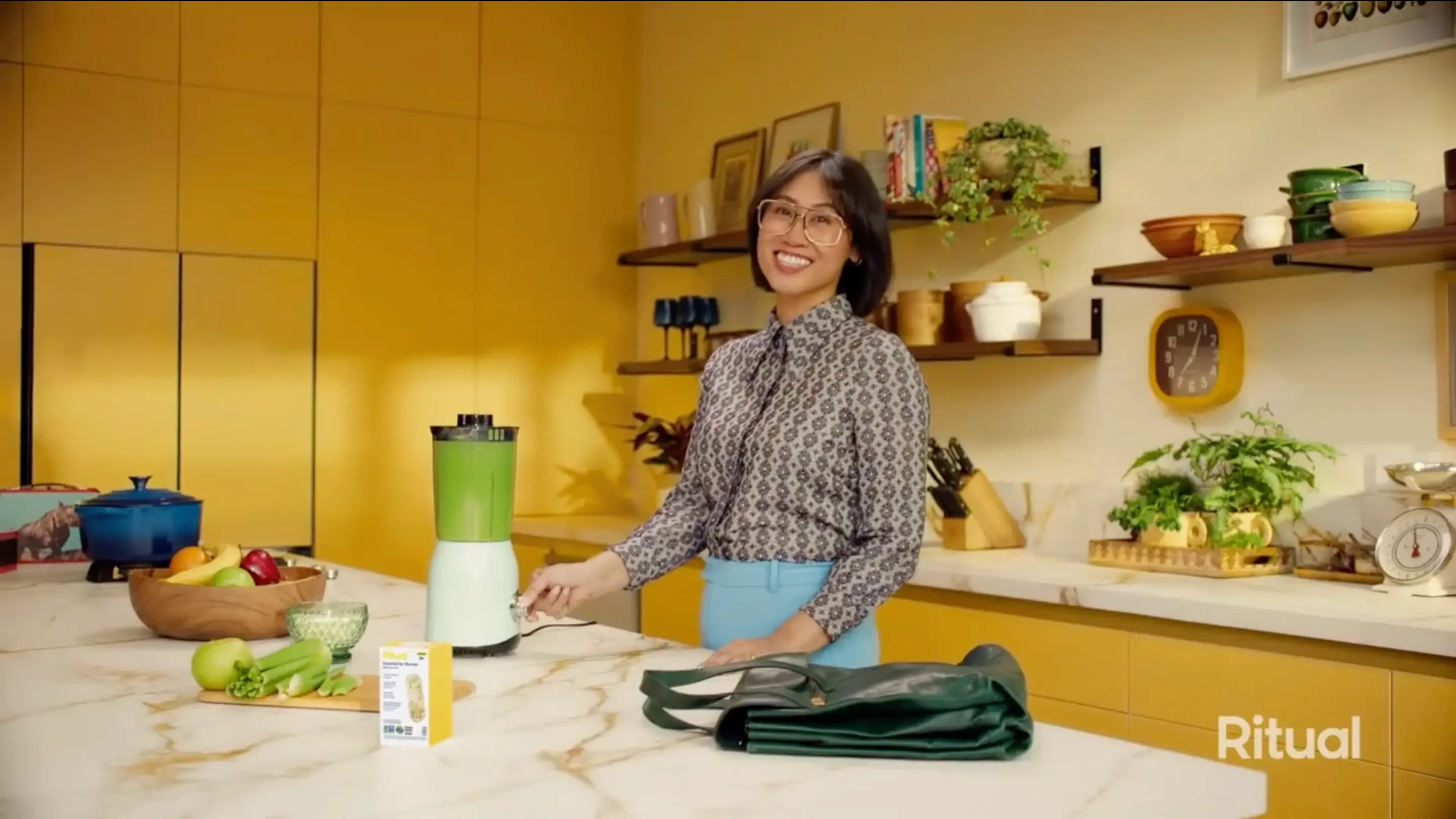
June 2025 - “In a World Full of Fakes” campaign.
Created with Google Veo in 24 hours. AI avatars openly admit they’re “fake” – delivering the message: the spokespeople may be digital, but Ritual’s science and ingredients are real.

At the same time, Ritual rocked strong content marketing: blogs, podcasts, educational materials on social media.
10. “Aggressive Transparency” as a Political Strategy
In 2025, Ritual made a move that goes far beyond standard branding. The company started actively lobbying for the passage of SB 646 in California – a bill that would require all prenatal vitamin manufacturers to disclose heavy metal data in their formulas.
It’s an unconventional play: the company is pushing for regulation that will directly hurt weaker competitors. Schneider openly calls it “aggressive transparency”: make your own standards mandatory for the entire industry.
In March 2025, Schneider addressed Congress calling for stricter oversight of the supplement market overall. A public gesture with a double message: “We’re so confident in our product that we want everyone else to have to do the same.”
11. New Products and Plans for 2026
In October 2025, Ritual launched Natalbiotic™ – a 3-in-1 prenatal probiotic. In 2026, it’s set to become the flagship product in the maternity category, distributed through Walmart.
Top priorities for 2026 (per their Impact Report):
- Publishing clinical research results for HyaCera (skin) and BioSeries Melatonin (sleep)
- Scaling at Walmart - the goal is to become the “new standard” in mass retail
- Completing 100% sustainable packaging (98% done by end of 2025 - exception: Synbiotic+, for which fully recyclable containers are currently incompatible with storage requirements)
12. The Other Side: Trustpilot Tells a Different Story
For all the brand's strength, Ritual has one painful weak spot. On Amazon, products average 4.5 stars. But on Trustpilot – 1.7 out of 5, with 72% of reviews being one star. And almost all of them say the same thing: the subscription keeps charging after the first purchase, it's nearly impossible to cancel, support ignores requests, and refunds are nearly unattainable. Yeah – the same brand with a 92% repeat purchase rate.
This is the classic DTC trap. Subscriptions are the primary source of predictable revenue and high LTV. But when the cancellation process is made intentionally (or accidentally) painful, it’s a direct contradiction of the transparency value the brand was built on.
Individual products get criticism too: Sleep BioSeries Melatonin has a 3.8 rating (users report low effectiveness), Magnesium+ comes in at 3.7 (complaints about taste and no measuring spoon included).
13. Why Ritual Succeeded: A Breakdown
Timing and market
- The women's supplements market is growing fast: ~$18B (2023) → $40B+ by 2030.
- Millennials and Gen Z shop online and demand ingredient transparency.
- Younger consumers didn't trust the old vitamin brands from the 90s-2000s.
- Existing players had clear weaknesses: Thorne – science-forward but no female focus; Olly – strong marketing but superficial formulas; Nature Made – wide distribution but zero transparency and an outdated image. Ritual found the unclaimed intersection: science + women's focus + honest communication.
Authenticity as an operating principle
The brand grew out of a real problem. It shows in the product, the marketing, the partnerships. When authenticity is operationalized – not just declared – it’s very hard to copy.
Trust over speed
Two years, one product. Profitability before mass retail. Retail expanded methodically: Whole Foods → Target → Ulta → Walmart. Each step organically set up the next.
Science as differentiator, not PR
Clinical trials on finished formulas (not just individual ingredients) are rare in this industry. $5M invested in research signals this isn’t just a marketing talking point.
Women-led business for a women-focused market
~75% of the board and ~60% of the team are women.
Takeaways
1. Frustration is the best product source
If the pain is real and shared by thousands – that’s a ready-made market. Look for systemic dissatisfaction.
How to use: How to use: dig through the comments for “I can’t find a single product that does THIS” – and start right there.
2. Two years, one product. Nine ingredients instead of thirty
Ritual’s focus and restraint gave them a clear brand message and strong LTV. Don’t launch a 20-SKU lineup.
How to use: How to use: launch one product, prove the unit economics, and make it perfect.
3. Differentiation must be operational
Ritual’s “transparency” isn’t just in the copy and the see-through bottle – it’s in the product’s DNA: traceable sourcing, clinical trials, public stance on regulation.
How to use: How to use: ask yourself: “if you strip away the slogans and CTAs, does my USP survive?” If not – build it into the product, not the copy.
4. Subscription models have a dark side
A 92% repeat purchase rate looks like a dream – but a hidden cancellation process destroys trust if you’re playing the long game.
How to use: be careful with subscription terms and communications. A customer you kept by force will go leave a 1-star review on Trustpilot.
5. A scandal can become a strategy
After the NYT story, the brand strengthened its scientific foundation and invested $5M in research. The right response to a crisis isn’t to justify yourself – it’s to structurally get stronger.
How to use: first, don’t get caught. Second, when you are – don’t immediately post an apology and definitely don’t delete posts. Identify and publicly commit to fixing the specific process or standard that failed.
6. An influencer ≠ an ambassador
The Serena partnership is a role as an advisor, integration into the product, a long-term context. She tests products before launch, curates a collection, advocates for women’s health. One-off posts create reach. Strategic alliances create trust equity.
How to use: ask who among public figures genuinely lives your values – even without your brand – and already talks about the problem you solve. Find that person, and offer them a role, not a contract.
7. The most valuable asset is trust
Ritual sells a sense of control in a chaotic category - and earns that trust at the most important moments in life.
How to use: map out three moments in your customer’s life when they’re most vulnerable and most attentive to their choices – pregnancy, illness, a lifestyle change. If your product isn’t present or doesn’t speak to those moments, you’re missing your most powerful entry point into a long-term relationship.
And finally, just take a look at this
Ritual is building an empire. And their customers are building new people at the same time.