Grüns: How a Bear Outran the Gummy Market and Sold for $1.2B
Time to read:
30 min
|
Publication date:
November 26, 2026
Summer 2022, Utah. Chad Janis is standing in his parents' kitchen, looking at the dish rack. Drying on it is the shaker he used that morning to mix his greens powder. It's day two of his new healthy habit, and he already doesn't like the powder: it tastes like chalk, leaves sludge at the bottom, takes forever to mix, and then the shaker needs washing. He's definitely not making it past 30 days.
In less than four years, Unilever will announce it's buying his company, Grüns, for roughly $1.2B. But right now, that company doesn't even exist.
At SIRKA, we've already broken down the stories of AG1, Ritual and Lemme. Now it's time for the Grüns phenomenon. Let's figure out how the brand walked into a crowded corner of the supplement market and pulled sharply ahead.
Grüns in Numbers
August 2023 – sales launch on the brand's own website.
$300M ARR in month 24.
About 10 million gummies sold per day.
Roughly a million customers and about 7,000 stores.
Over 90% of revenue comes from subscriptions. 80% of subscribers eat Grüns every day.
About $55M raised in total.
April 2026 – Unilever deal announced. June 2026 – deal closed.
Who Is Chad Janis
Janis grew up in Dallas in a Mormon family with seven kids. He describes their income as lower middle class. His father was an accountant. Chad's mentors in the Boy Scouts and at church were consultants from BCG, McKinsey and Bain, which gave him an early sense of where he wanted his career to go.
After high school, he spent two years as a missionary in Europe. Then came university: he started in accounting, like his father, and later switched to finance. After graduating in 2017, he worked for a year as an analyst at the investment bank Lazard in New York, and says he barely remembers that year.
Around the same time, he started his first business. Janis ran a blog about flying on miles and points, then built a service for booking flights with points. The project reached about $100K in annual revenue at around a 90% margin. When Janis got a job offer from an investment firm, he simply shut it down without even trying to sell it. Since then, he's had a simple rule: a business that can't bring in at least $5M a year doesn't interest him.
Chad Janis, founder and CEO of Grüns
Janis spent three years at Summit Partners, a Boston investment firm, from 2019 to 2022. The firm works in growth equity: instead of backing early-stage startups, it invests in companies that already make money and are growing fast. He deployed about $1.4B, roughly 30% of the fund, and sat on the boards of Dr. Squatch, Brooklinen, Thuma, Ruggable and Chubbies. Hundreds of conversations with DTC brands gave him something most founders don't have: an understanding of what a brand's economics look like when it grows fast without burning out. He later brought that knowledge to Grüns, where the ceiling on customer acquisition cost was calculated from day one.
In 2022, he enrolled at Stanford and took out a student loan. He moved into a small room in the Escondido Village student housing with his wife Hannah and their six-month-old son. That's the room where Grüns began.
The Gummy Market Before Grüns
Grüns didn't invent gummies. By 2023, they were already the most popular supplement format in the US: according to Nutrition Business Journal, gummies accounted for 21.3% of all sales in 2021, and their share grew to 25.5% by 2024. Powders, for comparison, held 17%. In a format this crowded, you can only win with a product that's clearly different from everything else. Otherwise, the brand gets lost among hundreds of look-alike jars on the shelf and in search results.
Janis himself splits the history of the gummy category into three waves:
The first wave – kids' vitamins. Yummi Bears from Hero Nutritionals, from the late 1990s, are considered the first gummy vitamin. Pediatricians were wary of them: low doses, no iron or calcium, lots of sugar. Essentially, they were fruit candy with a couple of vitamins.
Yummi Bears are considered one of the first gummy vitamins
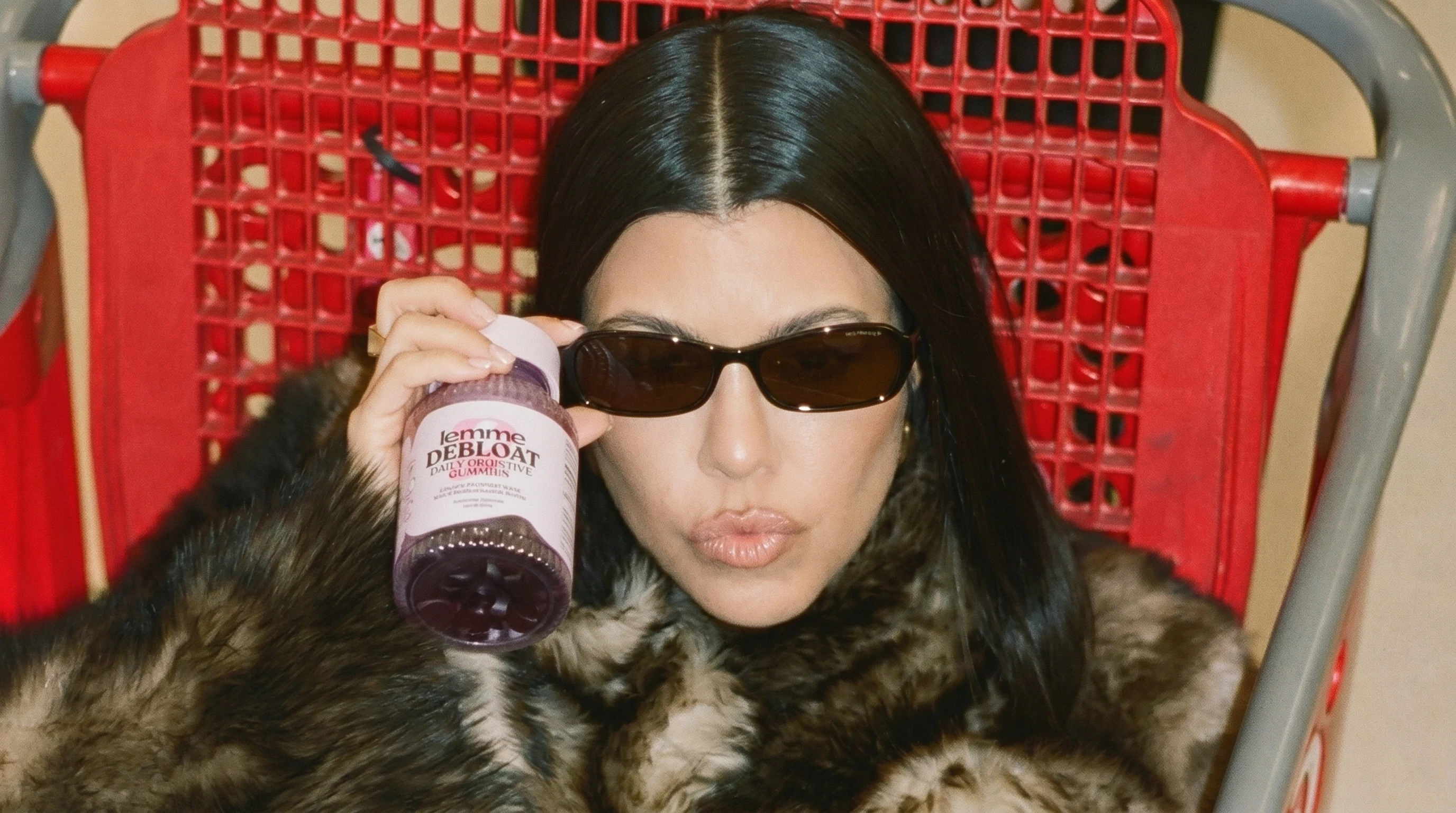
The second wave – adult gummies for a specific job. OLLY appeared in 2013: sleep, stress, skin, beautiful jars and a clear benefit. In 2019, Unilever bought it. Then influencers picked up the wave: Sugarbear Hair with the Kardashian-Jenners, Goli with apple cider vinegar, which grew to $438M in sales in two years, and, in 2022, Kourtney Kardashian's Lemme. They all used the same formula: one ingredient or one benefit, a 60-count jar, two gummies a day, around $19.
By 2023, this model was cracking. Goli's manufacturer went bankrupt at the end of 2022, and in 2024 the brand itself changed owners. Janis says single-ingredient products rise and fall with the trend. The category's reputation was weak, too: 3–8 g of sugar per serving, fewer actives than in a pill, and regular mismatches with the label. Greens gummies already existed, but the greens in them amounted to a pinch: 255 mg per two gummies in Goli Supergreens, 150 mg in 8Greens. The real money in this category was made by powders. AG1 alone sold $600M in 2024 at $79 a month.
Beauty, women's vitamins, probiotics and a kids' line from OLLY.
The third wave is Grüns. It took the familiar format from the first wave and the design and social media love from the second, then went up against powders: a full daily set in one pack instead of one trendy ingredient.
Eight Bears in a Pack
To build a product that could stand next to AG1, Grüns had to make the daily serving four times bigger. Eight gummies gave it room competitors didn't have: 60 ingredients, 21 vitamins and minerals, components from more than 30 organic fruits and vegetables, and 6 g of prebiotic fiber.
The single-serve pack solved several more problems. It turns taking a supplement into a ritual: one pack, one day, nothing to count out. And the ritual helps people stick with it, which keeps the subscription going. The pack is easy to carry and easy to share: friends try the bears from someone else's pack, and every customer becomes a free acquisition channel.
Grüns also worked on the category's reputation. A pectin base instead of gelatin, a vegan formula, no synthetic dyes or sweeteners. In the second year, low-sugar and sugar-free lines appeared. All of this answered the main objection: "these are just candy." Without that, Grüns couldn't have charged an AG1-level price.
In the first year, the formula was changed five times. For example, the team switched to methylated vitamins, which, according to Janis, are better absorbed. Each change removed one more reason people quit.
But Janis considers taste Grüns' biggest trump card, and it's what reviews mention most often. For a subscription brand, this is a money question: the company only earns if a person keeps taking the product a month later and six months later. A supplement that tastes bad gets dropped in the first month, just like Janis dropped his powder, and the subscription gets canceled along with it.
It's hard to offer a friend a scoop of greens powder as a treat. A gummy bear is a much easier sell.
Twenty Rejections and Packing by Hand
Janis tried making the first version himself, in his mom's kitchen, using silicone molds from Amazon. The experiment lasted two weeks.
Then he started calling contract manufacturers. There were about twenty of them, and every single one said no: bad idea, it'll taste awful, it won't work in a gummy. Most of them made single-purpose gummies, and a 60-ingredient, low-sugar formula looked like a gamble. One manufacturer agreed, reasoning that the startup would go under soon anyway, but since it was paying up front, why not. Today, that manufacturer thanks Grüns for transforming its business.
Janis tested the product on his classmates. More than a quarter of his MBA class tried early versions and gave feedback that shaped the product that launched in August 2023.
Then came a problem nobody had thought about: there was no ready-made equipment for packing sticky gummies into small packs. For the first six months, twenty people counted out bears by hand and sealed the packs with a clamp that looked like a construction stapler.
Today, production is automated and ships about 10 million gummies a day. New formulas are developed by four in-house "gummy scientists." Samples go out to employee testers and get refined based on their feedback. Having its own facility and its own R&D team freed Grüns from depending on contractors, and launches became more frequent: four in 2025 and ten planned for 2026.
It's an interesting paradox. The single-serve pack was one of Grüns' main advantages and, at the same time, its biggest barrier to scaling. But that same barrier protected the brand from quick copycats.
Launching From a Dorm Room
Janis didn't hire an agency for the launch. He built the website, emails, email flows, landing pages and subscription himself. About 80% of what he built in the first week is still running on the site. It was cheaper and faster, but most importantly, the whole funnel was in his hands: any page or email could be changed the same day. The first hire, about six weeks after launch, was a customer service manager.
The first money came from classmates. About twenty people put in between $5K and $25K each, about $400K in total. One of them later recalled that back in early 2023, Janis predicted selling the company for $600–800M within three years. In the end, he was off by about half, on the low side.
Sales started in August 2023. Within a few weeks, some days were bringing in $5K. Grüns made about $30K in its first month and about $230K in its second. In December, the brand launched on Amazon.
One of the first versions of the Grüns website, July 2023.
Before turning profitable, the company spent about $8M of raised capital. For comparison: in our article on how much it costs to launch a supplement brand in the US, we estimated that a full DTC brand starts at $200–300K. Grüns shows what hyper-fast growth costs. The business became profitable in August 2024, exactly one year after launch.
Janis nearly flunked out. Two weeks before graduation, when Grüns already had about $50M in revenue and six or seven employees, he told his wife he might not get his degree: he was one point short of a passing grade. He refused to stay on for another quarter. In the end, he got his diploma.
A Bear Instead of "Clinical" Packaging
The name came quickly. Grün is German for "green," and the s at the end makes the word short and playful. The domain gruns.co was available. Janis compares the two dots over the ü, the umlaut, to the eyes of a smiling face. Later, that letter would become the foundation of the company's entire brand architecture, but more on that below. If you're naming your own brand right now, read our breakdown on how to name a supplement brand without screwing it up: everything fell into place for Grüns, but not everyone gets that lucky.
Janis designed the first pack himself in Canva in half a day. A dark, almost black pouch, a white grüns daily logo, six benefit icons. It looked like a serious functional supplement. For selling on its own site, that was enough: customers came from ads and already knew what they were buying.
The shelf doesn't work that way. Before going into stores, Grüns brought in the agency Interact. The new identity, which Dieline covered in January 2025, kept the sense of science but added what was missing: a bear in the logo, a bright palette, a clear benefit hierarchy and one system for the adult and kids' lines. A retail consultant interviewed by Inc. specifically pointed to the word daily on the front of the pack. It tells shoppers right away how to fit the product into their day.
Rebrand by Interact: an updated bear, bright colors and a clear benefit hierarchy, so Grüns looks like a tasty habit rather than a pharmacy supplement and is instantly recognizable on the shelf.
The shelf kept teaching the brand. The kids' line was originally called Grüns Cubs, as in bear cubs. Supermarket shoppers didn't realize it was for kids, and in October 2025 the line was renamed Grüns Kids. Nütrops nootropics swapped their pale yellow packaging for a saturated purple so they'd stand out on the shelf.
The Grüns Cubs kids' line was renamed Grüns Kids: a clear name turned out to matter more than a clever one.
Wait, so why bears? Janis never explained it himself, but the logic is clear. The gummy bear is the most recognizable gummy shape: Germany's Haribo came up with it back in 1922. Bears are familiar from candy and kids' vitamins, but they were almost absent from adult supplements. On top of that, it's a standard shape at manufacturers, so Grüns most likely didn't have to spend $10–15K on a custom mold at the start.
Many founders are afraid that an adult product that looks like a kids' product won't be taken seriously. Grüns took the risk. The bear instantly set the brand apart from the "serious" jars, later became the logo and looked great on camera. And the "isn't this for kids?" doubt was handled by the formula, the AG1-level price and a separate landing page built specifically to take the stigma off gummies.
Grüns' mascot, Barry the Bear, in his many forms. He was created back at the seed stage (2023–2024), but he still hasn't settled on one look.
99 Landing Pages for One Product
Grüns grew on paid Meta ads, but the setup is more complex than "find a winning creative and scale it."
The Funnel of the Week team spent a week digging into Grüns' funnels and counted more than 99 active landing pages for a single product line. A typical DTC brand has one to five. Here's how ad traffic is split across the main pages:
the first-order page – 21.5% of traffic, with 801 ads pointing to it;
a listicle for people taking GLP-1 drugs – 9.9%;
gut health – 9.8%;
fiber – 5.5%;
a comparison with greens powders, meaning AG1 – 2.9%;
a page that tackles the objection to gummies head-on and is built to destigmatize them – 2.5%;
perimenopause – 1.6%, male fertility – 0.9%.
After that comes a long tail of seasonal pages, pages for specific audiences and links to sister brands. Over 30 days, the brand had 776 active ads, 634 of them new.
The logic behind this is simple. Janis has said the team ships hundreds of ads a month and tests angles like "Poop more" or "Ozempic's best friend." When an angle works, a whole funnel gets built around it: creatives, landing page, popups and emails. Someone who clicks an ad about constipation on GLP-1 doesn't land on a generic "60 superfoods" page. They see a page about their problem. For what belongs on each of those pages, we have a separate breakdown of landing page anatomy.
Hero sections of three of Grüns' 99 landing pages
Judging by the data, the strongest angle is GLP-1. Variations of a headline about 20+ vitamins to support you on GLP-1 appear in 204 active ads, and the same copy has been running for over 200 days. Grüns positions itself as a companion to weight-loss drugs: people on GLP-1 are short on nutrients and fiber, and a pack of bears covers both. The Barbie doll ads, which turn GLP-1 constipation into a joke, come from the same playbook.
The "GLP-1 + Poops" angle in Grüns ads
Here's another detail that's easy to miss. Grüns has three separate Facebook pages: the main one, the kids' one and Holistic Wellness Magazine. The last one looks like a publication's page and runs Grüns ads styled as editorial recommendations. On the one hand, it's insurance: if one page gets restricted, the funnel keeps working. On the other, the mechanic is very close to the prelanders the gray market has used for years, and it's a gray area when it comes to transparency.
Whitelisted ads (ads run from a creator's account) feature Barbara Corcoran from Shark Tank, actress Lisa Rinna, TV host Jesse Palmer, nurse-creator Nurse Jackie and Janis himself. An ad from a familiar face reads like a personal recommendation rather than a brand banner, and people trust it more. In March 2026, the site had about 1.2 million visits, more than half of them direct. A brand that started on paid ads had become something people typed into the address bar themselves.
Thousands of Nano- and Micro-Creators Instead of a Few Stars
Grüns does have stars. In February 2025, Bethenny Frankel talked about the brand on TikTok, singer Jessie James Decker worked with it, and in sports, Grüns became an official partner of the women's soccer club Gotham FC. But Janis himself admits that none of these collaborations performed noticeably better than the rest. The heavy lifting is done by very different people.
Celebrities Lisa Rinna, Tinx and Hannah Brown choose Ü Snacks gummies. Source: the brand's Instagram
Over a year, Modash counted about 6,000 sponsored Grüns posts, and 91.7% of them were on TikTok. Almost 80% of integrations went to creators whose videos average under a thousand views. Another 14% or so went to creators with reach between one and five thousand. So more than 90% of the brand's integrations are small creators most brands don't even consider. Instagram looks similar: over six months, HypeAuditor found 922 Grüns mentions from 724 creators, almost 80% of them in Reels, and more than three quarters of those creators are nano- and micro-influencers. The biggest group is family creators, followed by beauty, lifestyle, fitness and even Costco haul reviewers.
Engagement is modest, around 0.55%, and any single post barely moves the needle. What matters is reach: Grüns shows up in hundreds of small feeds at once, from moms to triathletes to people on GLP-1, and in each one it looks like part of the creator's everyday life. The product is almost perfect for this: you just open the pack on camera. The best videos then go into paid ads run from the creators' accounts. By the way, the team makes almost all of its creative in-house, without agencies.
Thousands of nano- and micro-creators on TikTok did more for Grüns than any celebrity.
An Offer That Sells Consistency
Grüns' first order almost always comes with a discount. Ads have offered up to 52% off, and even up to 61% off with free gifts. But the more interesting part is what happens after you click "buy."
Funnel of the Week went through the funnel to the very end. The first upsell offers to switch to delivery every 12 weeks and get three packs for the price of two. The price per pack is the same, and the third one effectively comes at a 33% discount. In other words, Grüns gives a discount in exchange for commitment rather than money: the customer subscribes for three months instead of one. The second upsell offers one more pack at the subscriber price. In the test order, the total grew from $40.80 to $86.50, or 2.1 times. No timers, no pressure and no forced bundles. According to Shopify, Grüns' average order value ends up at almost $100.
Behind all this aggressive advertising sit fairly conservative economics. From day one, Janis had a ceiling on customer acquisition cost: an LTV to CAC ratio of at least 3x, with LTV calculated on net gross profit over 36 months, after cost of goods, discounts, returns and shipping. In his words, growth comes from profitable cohorts stacking one on top of another, not from a giant flood of new customers.
The War With AG1
From the start, Grüns went after the leader head-on. Early ads promised that Grüns was cheaper than AG1 and much easier to take. They described powders as tasting like dirt. Another ad's tagline boiled it down to pills or gummies, with the choice being obvious. In May 2026, Fast Company compared the subscriptions: about $40 a month for Grüns with current discounts versus $79 for AG1.
In June 2025, the Grüns blog published an "AG1 vs Grüns" article under a dietitian's byline. It honestly admits that AG1 has 75 ingredients and Grüns has 60, and doesn't try to win on numbers. Its conclusion is different: the best supplement is the one that's easy for you to take every day. Content like this intercepts people who already know AG1 and are in the middle of choosing.
The war itself was fought in ads, but the results show up in search. According to Brandwave, from November 2025 to October 2026, Grüns' share of branded searches in the greens category grew from about 29% to 39%, while AG1's fell from about 58% to 48%. AG1 is still ahead, but the gap is closing fast. A brand that spent more than a decade investing in podcasts and awareness probably doesn't love this chart.
In comparison articles backed by Grüns, AG1 comes across as a serious "pharmacy" powder that's a chore to measure and mix, while Grüns is a pack of tasty bears you can eat on the go or share with friends.
The Subscription Worth Cutting Marketing by 93%
More than 90% of Grüns' revenue comes from subscriptions. That's expected for a product people eat every day, and for how this model works, we have a complete guide to subscriptions. The more interesting question is how Grüns keeps subscribers interested.
Every one to two months, there's a new limited flavor, often made with another brand: the Grinch, Popsicle Firecracker, Olipop soda, Mango Sorbet. Each collab runs in ads for 12–14 days. Subscribers don't have to change any settings: they just reply "yes" to a text, and the next box comes with the new flavor. Every limited drop gives subscribers a reason not to cancel, and switching to a new flavor with one text is easier than leaving. Janis's goal: 12 different versions of Grüns in 12 deliveries over a year.
Collabs also bring in new audiences. In October 2026, Grüns released a bundle with the kids' brand Once Upon a Farm: a month's supply of Grüns Kids and 16 fruit-and-veggie pouches for $75.88. By November, it had sold out. Grüns VP of Product Juliet Choi, Janis's classmate and the company's ninth employee, explains the logic of the kids' line like this: you can put everything a child needs into a gummy, but if they don't eat it, none of it counts.
Another Grüns rule: never leave a subscriber without product. In January 2024, six months after launch, Grüns ran short on inventory. Janis cut the marketing budget by 93% overnight so there would be enough product for existing subscribers. For a startup taking off, that's an almost unthinkable decision. But for a subscription business, an empty box is worse than a missed new customer: someone whose habit gets interrupted may very well never come back.
History repeated itself with Immün, immunity gummies in a sour pineapple flavor. It launched in October 2025, with stock expected to last 30–60 days. It lasted about two. Two days in, Grüns closed new Immün subscriptions and only brought the product back three and a half months later.
Subscriptions have a downside too. Grüns has 4.6 stars on Trustpilot, but a noticeable share of negative reviews are about the same thing: the subscription is hard to cancel. We've written about how almost every subscription DTC brand eventually runs into this problem in "91% don't buy a subscription".
Getting Onto Retail Shelves
Janis started talks with retailers in January 2024, even though everyone advised him to wait. His pitch to buyers was unusual: Grüns brings people into the aisle who had never bought greens supplements before. For a retailer, that means the whole category grows.
Sprouts came first, in December 2024. Headline, the future lead investor, later wrote that within a few weeks of launch, Grüns became the store's best-selling supplement. Then things moved very fast: Target in February 2025, 1,900 Walmart stores in April, Sam's Club in October, H-E-B, Hy-Vee and Wegmans in early 2026, Costco in March, Ulta Beauty and more than a thousand Kroger stores in April. In fall 2024, Grüns wasn't on a single shelf. By the end of 2025, it was in more than 6,000 stores, and by spring 2026, about 7,000. The brand grew online too: on Amazon, according to Forbes, Grüns became the best-selling greens supplement. Janis calls the economics of this channel excellent, partly thanks to simple subscription management with one-click cancellation.
According to an investor from PLTFRM, Grüns has almost never gone out of stock on shelves. For retail, that matters as much as it does for subscriptions.
Grüns hits the shelves at Target (February 2025) and Walmart (April 2025, 1,900 stores). Photo: Chad Janis's LinkedIn
The Money and the Unilever Deal
Over its history, Grüns raised about $55M. After the classmates' money came a pre-seed round, then $6M in February 2024, and finally a $35M Series B led by Headline at a $500M valuation. The round closed in early 2025 and was announced in May. Investors include Anna Kendrick and Shaun White. White also became an ad partner for the brand: in an interview with People, he said he switched to gummies after a bag of powder burst in his suitcase.
By the brand's second birthday, in August 2025, Grüns had passed $300M ARR. That's about $25M in revenue a month. At the time, Inc. compared Grüns to AI startups: Cursor, that year's record-holder, reached $100M ARR in 12 months. According to an Inc. source, ARR grew to $550M by March 2026, but Janis himself didn't confirm that figure. Estimates of actual 2025 revenue vary widely, from about $100M per Forbes to well over $200M by Inc.'s calculation.
On April 9, 2026, Unilever announced it was buying Grüns. The terms weren't officially disclosed, but Axios and Forbes put the deal at about $1.2B, roughly 4x annual revenue. Janis didn't hire a banker for the deal. By Forbes' estimate, he still owned about half the company. Early investors, according to one of them, made roughly a hundred times their money.
The team is a story of its own. Grüns now has about 130 people, the company is fully remote, and every employee holds equity. Janis, 33, lives in Austin and calls autonomy his main principle: everyone runs their area like a CEO and owns the result. Headline partner Nancy Xiao has said that Grüns' revenue per employee is on par with the best tech companies.
Remember OLLY? By then, Unilever already owned two gummy brands, OLLY and SmartyPants. The corporation bought a third one anyway. The deal closed on June 1, 2026. In its third-quarter report, Unilever specifically highlighted Grüns' very strong growth, even though its entire Wellbeing business slipped that quarter.
AG1 Answers With Gummies
In May 2026, AG1 CEO Kat Cole explained why their product couldn't be turned into a gummy: probiotics wouldn't survive the heat, and it would take too many gummies.
On August 11, 2026, AG1 launched Essentials Gummies anyway, its first new format in 16 years. Eight gummies in a daily pack, 50 nutrients, $49 a month on subscription. The formula is its own, lighter than the powder, but the format is instantly recognizable. On the same day, its third birthday, Grüns, according to Janis's LinkedIn post, permanently cut its subscription price from $59.99 to $49.99 for all customers, including existing ones.
It would be wrong to say AG1 moved into gummies only because of Grüns: the category was growing anyway. But three years ago, Grüns stood apart from AG1 through its format. Now the brands compete in the same format, and Grüns will have to win on taste, range, shelf presence and how easy it is to live with.
The competition won't end with gummies: both brands are moving into drinks (RTD). AG1 has announced a canned drink, and Ü Snacks has filed trademark applications for drinks.
What's Next: Ü Snacks and a Billion in Sales
After the deal, Janis made it clear to Forbes that he isn't done. He stays on as CEO and is counting on Unilever's help with three things: product development, the marketing it will take to reach $1B in annual sales, and expansion beyond the US.
The company launches new brands separately instead of hanging everything on the Grüns name. There's the kids' line, Nütrops nootropics, Immün, Jüced energy gummies and, as of September 2026, Müves, a prebiotic fiber gummy with 10 g per serving. Müves follows the same logic as Grüns itself: take a category where people are used to drinking powders and move it into gummies. Janis explains that this way, each brand keeps one clear association. What ties them together is the shared letter ü, and in February 2026 the company officially renamed itself from Grüns Nutrition to Ü Snacks. On the shelf, that's a signal: if you trust one pack with a ü, you'll trust the one next to it.
Ü Snacks' first five products
Several signals point to the company's plans for the coming years. In 2025, it made four launches, and for 2026 it planned ten, including limited flavors. The Shopify case study mentions 12 new products over a two-year horizon. An Inc. journalist found 26 trademark applications featuring the letter ü: Beüty, Tüth, Wümb, Vrüm and others. Ü Snacks has bought more than a thousand domains, and its trademark applications cover not only supplements but also drinks, bars, candy and dried fruit. This way, the company locks in the names of future brands before anyone else can grab them, and can launch a new brand as soon as the product is ready. At the same time, Janis keeps repeating that the company only plays in "evergreen" categories, where the need won't disappear along with the trend. That's a direct lesson from the second wave: people will always need immunity or fiber support, but the apple cider vinegar craze has passed.
The second direction is international markets. Grüns now has a VP of International, and the company is already preparing an international Shopify store. Back in November 2025, Janis promised to enter retail abroad by the end of 2026. In the US, the brand is expanding into drugstore chains and grocery stores. Janis is also interested in shopping through AI assistants: for a business that gets 90% of its revenue from subscriptions, this could become one more channel.
The Flip Side
Fast growth comes at a price. Several class action lawsuits have been filed against Grüns. One concerned the promise of "comprehensive nutrition": in May 2026, a New York court dismissed most of the claims, but the plaintiffs filed an amended complaint. Others, filed in August–September 2026, concern the "sugar-free" label on products containing allulose, which comes to 6–9 g per daily serving. The FDA allows allulose to be left out of the sugar count on labels, so the dispute is specifically about the wording on the pack. One of the suits claims that testing found 5.27 g of fiber in a pack instead of the promised 6 g. ConsumerLab, an independent lab, isn't impressed either: in its view, the "greens" in Grüns are more decoration than substance, and the real work is done by the added vitamins and fiber.
None of the allegations has been proven yet. But for a brand that sells the completeness of its formula, every word on the pack has turned out to be a potential count in a lawsuit.
What We're Taking Away
1. Choose Your Benchmark, Not Your Format
Grüns could have become just another $19 gummy. Instead, it positioned itself next to a $79 powder and built a product that holds up to that comparison.
How to use it: before launch, ask yourself what the customer will compare you to. Your price, formula and packaging need to be convincing next to that specific competitor, not next to your neighbors in the same format.
2. Solve the Consistency Problem
People know they need vitamins and greens. They just give up. Grüns built the entire product around one metric: how many people eat it every day. Today, that's 80%.
How to use it: look for convenience complaints in competitor reviews: "gross," "I keep forgetting," "sick of mixing it." We covered how to do this systematically in our article on how to analyze competitor reviews before launch.
3. A New Format Means New Operations Too
Twenty manufacturer rejections and six months of packing by hand look like a problem. In reality, that was the very barrier that kept competitors from quickly copying the product.
How to use it: if your product is easy to make on a standard line, it'll be just as easy to copy. Manufacturing complexity can be an advantage if you're willing to push through it.
4. One Winning Angle, One Funnel
99 landing pages for one product sounds like overkill until you look at the logic: a person on GLP-1, a mom packing a school lunch and a woman in perimenopause buy the same pack for different reasons.
How to use it: when an angle shows results in ads, don't send that traffic to a generic page. Build a dedicated landing page, emails and a popup for it, and let the platform connect that message to that page.
5. An Upsell Can Sell Commitment, Not Just a Bigger Order
Three packs for the price of two in exchange for delivery every 12 weeks is less a discount than three months of habit the customer agreed to on their own.
How to use it: take another look at your upsells. Offering a longer subscription cycle may pay off more than adding one more item to the cart.
6. Never Leave a Subscriber Without Product
Cutting marketing by 93% and closing new subscriptions on a hit product hurts. Losing subscribers whose habit got interrupted costs more.
How to use it: in your launch plan, calculate inventory for your base of active subscribers, not for your ad forecast. New customers can wait. Existing ones may not come back.
7. Every Word on the Pack Can End Up in Court
"Comprehensive nutrition," "sugar-free," "6 g of fiber": all three claims ended up in lawsuits. For a brand that sells the completeness of its formula, that's a direct risk.
How to use it: check the claims on your packaging and in your ads as rigorously as you check your formula. Especially if your main argument is "everything you need in one."
We'll keep following Grüns' rise as its playbook turns into marketing classics right before our eyes. Starting in June 2027, the brand will count toward Unilever's organic growth, and that's when we'll find out whether the green bear can grow just as fast inside a corporation.