How to Name a Supplement Brand Without Screwing It Up
Time to read:
24 min
|
Publication date:
September 28, 2026
When you launch your own brand, the creative stage feels like a honeymoon at first. The formula is almost ready, the manufacturer is lined up, and you finally get to do the fun part: come up with a supplement brand name, daydream about the packaging, scroll through references. No unit-economics spreadsheets. Just you and a blank page.
Then a week goes by. Your notes app has a gazillion options. Half of them are already taken by someone on Amazon. Your partner suggests something weird. The domain for your favorite is for sale at $12,000. Your lawyer writes that half the names spell trouble. And it hits you: supplement brand naming is one of the most mentally draining stages of a launch. Positioning, linguistics, law, design and a bit of luck are all at play at once.
There are two ways through it. The first is to hand it to an agency. At SIRKA, for example, naming is part of our branding service: we derive the name from positioning and design the identity and packaging around it right away. The second is to go it alone, with an AI sidekick. In that case, this guide is for you: we've packed in (almost) everything we walk our clients through, from the brief to the USPTO filing. With exercises that pull names out of your head and red flags that will save you money
Before the brief: get in the right headspace and study the field
What rarely gets said about naming, what types of names exist, and how naming systems work.
Naming, honestly: what nobody's likely to tell you
A few things guides rarely mention, but we see on every single project.
Recognition is bought, not invented. The most recognizable names are rarely the cleverest. In our experience, a well-protected name that gets years of marketing investment always becomes recognizable: the more impressions, the more natural the word sounds.
The owner has to be obsessed with the name. You'll say this word more often than your own name: on calls with your manufacturer, in investor pitches, on podcasts and in stories. If nothing clicks inside, six months from now people will hear it in the way you talk about the brand. Listen to your gut: it's an important criterion.
Unfamiliar at first is normal. Every new word sounds strange for the first few days. Huel, Yakult and Poppi were also just a bunch of sounds once. Learn to tell "unfamiliar" from "awkward": the first wears off in a week, the second never does.
A name doesn't have to explain everything. Packaging, the tagline and a dozen other brand assets carry the meaning. A name that tries to say it all usually ends up long, descriptive and harder to protect. Take Happy Mammoth, which sells gut-health and hormone-balance supplements: it's named after its mission to "solve mammoth-sized health problems". Not a word about the gut, yet you can't confuse it with anything else on the shelf.
Consensus kills. A name nobody on the team objects to is usually a name nobody remembers. If one of your finalists sparks an argument, take a closer look at it.
SIRKA team's favorite name: SLEEP OR DIE
“It really stands out in the sleep category, where every name is soft and drowsy. And their branding is great, at least to my taste.”
— Dmitry Stepanenko, researcher at SIRKA
Launching a brand called "Sleep or Die" is pure entrepreneurial punk rock
Which supplement brand name works best
There's no universal study on "which type of name sells best", so don't trust anyone who shows you percentages. What does exist is a set of working criteria, and one of them is legal: the further a name is from describing the product, the easier it is to protect.
The spectrum is the same for any category, from a vitamin brand name to a protein one:
The classic trap of descriptive names: the brand grows, but the name stays tied to the first product. That's what happened with Athletic Greens: the word "Athletic" scared off everyone who didn't live at the gym, and the brand became AG1. More in our deep dive.
Instead of hunting for a "magic formula", check that the name:
is available and legally clean;
is spelled and pronounced right the first time;
shows up in search and doesn't drown among generic words;
leaves room for new products;
matches your positioning: a science brand shouldn't sound lifestyle, and vice versa;
reads neutrally in other languages (for the US, that means Spanish at the very least);
works as a handle, a domain and a hashtag;
looks good on the jar: a short word makes a stronger logo.
Brand name and product names are not the same thing
Many founders try to cram everything into one word: character, benefit and ingredient. It's easier to split them. The brand carries the character and stays broad; the benefit lives in the product name.
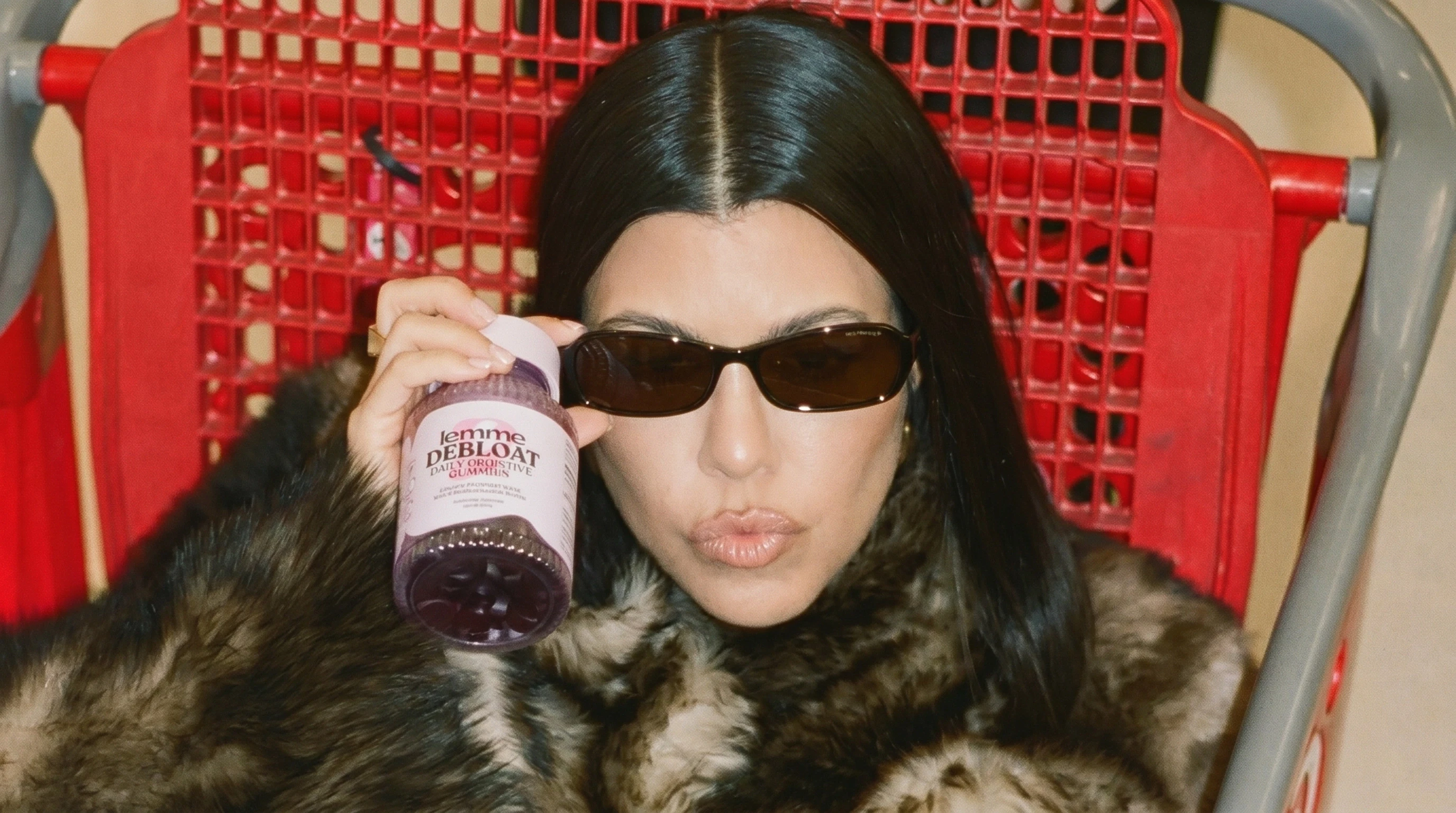
That's what Lemme did: the word "lemme" came up in brainstorms and became the brand's language. The products are named like everyday phrases: Lemme Sleep, Lemme Focus, Lemme Debloat. The brand can stretch into any category, and shoppers instantly get which jar does what.
Others have similar systems. At Spacegoods, every product is a "dust": Rainbow Dust, Matcha Dust, Astro Dust, Hydro Dust. Seed names its products with codes, like lab samples: DS-01 Daily Synbiotic, DM-02 Daily Multivitamin, AM-02 Energy + Focus, PM-02 Sleep + Restore. AM and PM read easily as morning and evening, and the code itself sounds like science, which is exactly what a probiotics brand needs.
If you have more than one product on your two-year horizon, build this system in from the start and note it in your brief.
SIRKA team's favorite name: MARS MEN
“I love the nod to "Men Are from Mars, Women Are from Venus". Two words, and it's instantly clear who the brand is for, plus it taps into a cultural code almost everyone knows. And it sounds light, without the macho overload typical of the men's category.”
— Kateryna Sokolovska, researcher at SIRKA
MARS MEN skillfully tap into the primal archetype of masculinity
The brief
Questions about the product, the market and you. This is also where you decide whether to keep going yourself or hand it to an agency.
A brief for yourself or for an agency
The most common mistake is to start with words. There are endless words, and without a frame, there's no way to tell which one is better. The brief sets that frame. You need it even if you're doing the naming yourself: it's a contract with yourself that you'll come back to every time you're tempted to pick something "just because I like it". The brief has two parts: the product and the market, and you.
The product and the market: 8 questions
Answer them in writing, one or two sentences each:
1. What are you selling? Details on the product(s), ingredients and the promised effect.
2. Who's the customer? Not "women 25–45", but "a 47-year-old woman building her career who has no intention of slowing down because of menopause".
3. What should they feel when they see the name? Calm, excitement, care, scientific precision.
4. What will the line look like in 2–3 years? If it's creatine today and sleep and memory tomorrow, the name shouldn't be about muscles.
5. Where are you selling? On Amazon, findability matters; in DTC, character; in retail, shelf legibility. If you plan to sell everywhere at once, pick a priority channel.
6. Which markets? The US, the EU, the UK: this determines which languages and databases you'll check.
7. What do competitors sound like? Write down 15–20 names in the category and see what they have in common.
8. What words does your customer use? Not marketing words, but real ones from reviews. We've written about how to build that vocabulary in an evening with AI in our piece on competitor review analysis.
About you: 8 honest questions for the owner
Only you can answer these, whether you're naming the brand yourself or handing it to an agency. Answer them upfront and honestly — it'll save you weeks of revisions.
How bold are you ready to go? There are names like Liquid Death (natural drinking water in cans, with the tagline "Murder Your Thirst"). They hook you in a second and stay with you. People either love them or hate them. There's no middle ground. Ask yourself if you can handle it: reading angry comments, explaining the name to your mom and your investors, defending it at every meeting. Supplements add another twist: people need to trust what they swallow, so provocation has to work for the brand, not against trust. If the answer is "no", that's fine. At SIRKA we use a "boldness scale": in the first round we show creative options at both extremes and in the middle, so the client can find their comfort zone on real examples.
Whoever pays the piper calls the tune. You're the owner, so voice your personal preferences from day one, even if they seem odd or silly. A lucky number, a favorite letter, a reference to a book, film or song that shaped you — all of it can be worked in, and the name will become truly yours. A good naming partner won't laugh at a request like that; they'll find a place for it.
Who makes the final call? One person, two partners, a board of investors. Your wife? Get this straight before the first option. Otherwise the name will be chosen by whoever argues the loudest.
What's the brand's horizon? If you're building to sell, be careful with your own name in the brand: a brand tied to a person is harder to hand over to a new owner. If it's a 20-year family business or you'll be the face of the brand yourself, like MaryRuth's, the founder's name can become a strength.
5 names you love and 5 you hate. Collect names from any category: coffee shops, cars, apps, fashion brands. A list like that tells your naming partner more than "modern, premium, but warm". Next to each, one line on why it's a like or a dislike.
A taboo list. Words, sounds and associations you personally dislike: your ex's name, a sound-alike of a competitor you're feuding with, a letter you just don't like the look of. Small stuff, but one item like that can burn a whole round.
How much are you willing to invest in a "clean" name? Buying the domain, registering in several classes and countries, a possible dispute with the owner of a similar mark. Your budget decides whether you can go for a beautiful but partly taken word or need to head straight for invented ones.
Can you let go of your favorite? Decide upfront: if the name you love doesn't pass the trademark check, you cross it out instead of trying to force it through. This is the hardest one, and it's better to promise yourself before you fall in love.
Don't want to go the rest of the way alone? This brief is exactly where we start working at SIRKA. Hand it to us, and naming will come together with positioning and packaging.
SIRKA team's favorite name: PRESENT PERFECT
“A perfect play on words. It's both the grammar tense everyone remembers from school and a clear promise of the state the nootropic delivers: you feel good right now. By the way, they're our client, so I'm a little biased.”
— Otari, co-founder of SIRKA
The name conveys the idea of perfect focus
Generation
Exercises that pull names out of your head.
7 exercises to help you come up with a brand name
A list of ten options goes nowhere, because the first ten are always obvious. Your competitors came up with them too. These exercises push you further.
1. Four territories. Split a page into four parts: benefit, ingredient or science, ritual and time, emotion and character. Give yourself 10 minutes and 10 names per territory. Don't judge, just write.
2. A metaphor from another category. Pick an image outside supplements: games, a city, music, cooking, wildlife. Turn it into a word. That's how Arcade became Arq8 and a jellyfish became Tudō (more on how we created these names below).
3. Root blending. Take two roots the Huel way (human + fuel) and build a table of prefixes and suffixes. Three hours of combinations give you what never comes "from inspiration".
4. A vocabulary from reviews. Export 200–300 reviews of competitor products and ask AI to pull out the words and phrases people use to describe results and feelings. The best names often sound like the customer talking, not the marketer.
5. A sound map. Plot competitor names on two axes: "short ↔ long" and "real word ↔ invented". Look for the empty quadrant: that's where nobody will confuse you with the rest. It's the same perceptual mapping we use for positioning.
6. The pronunciation test. Say the name to five people over the phone and ask them to write it down and search for it. Every misspelling is a lost customer.
7. The name in a sentence and on the jar. Write "I take ___ every morning", an Amazon title and an offer for the first screen of a landing page. Then put the name on a label mockup and shrink it to the size of a marketplace thumbnail. If it doesn't fit into a natural phrase or gets lost in the thumbnail, the brand will struggle with it.
AI is great at generating long lists and checking meanings across languages. Try a prompt like this: "Here's my brand brief: [add your brief]. Suggest 50 names across five types: associative, compound, invented, wordplay, and a metaphor from another field. For each, give one line of logic and a check for negative meanings in English and Spanish." But AI won't reliably tell you whether a name is taken in the USPTO: that's checked only against the database and with a lawyer.
Selection and vetting
From the shortlist to the domain, the USPTO database and regulatory limits — from free to paid.
How to pick among finalists without fighting with your partner
Out of a hundred options, you'll be left with 8–12. The riskiest thing at this point is a vote in the group chat: the winner isn't the best name, it's the most familiar one. Instead, score each one from 1 to 5:
Keep the top three and live with them for a week: write them in your notes, say them out loud, picture them on the shelf. The name you still like a week later goes on to the checks below.
Domain: a free .com is a big win, but not a dealbreaker
Finding a word with a free .com domain is real luck: short English words were taken long ago, and buying one from a domain flipper costs anywhere from thousands to tens of thousands of dollars. If your .com is free, register it the same day, even before you talk to a lawyer: it's about $10–20 a year and doesn't commit you to anything.
If it's taken, don't despair. Add a verb or a qualifier: try-, get-, drink-, take-, live-, my- or -health, -labs, -nutrition. Very successful brands live like this: drinklmnt.com, drinkpoppi.com, livemomentous.com, im8health.com, bloomnu.com, trycreate.co, thisisneeded.com. AG1 chose drinkAG1.com itself during its rebrand, and Grüns lives at gruns.co.
Once the brand grows, you can buy the clean domain. Hims started on forhims.com, which now redirects to hims.com. And tryarmra.com will take you to armra.com.
Two rules. The prefix has to feel natural for the product: drink- for drinks and powders, take- for capsules. And a domain doesn't solve the trademark question: if the word is taken in Class 5, a try- prefix won't save you. Pick your social handles the same way: @drinkbrand, @brand.health.
US trademark check: 8 steps before you file
The order goes from free checks to paid ones, which saves you both money and nerves. Cross a name out at any step where it fails, and don't try to push it through just because you like it.
1. Identify your classes. For supplements, that's Class 5 (vitamins and dietary supplements); for cosmetics, Class 3; for food and drinks, 29, 30 or 32. If you sell through your own online store, your lawyer may suggest Class 35 as well. Fees are charged per class, so agree on the final list with your lawyer instead of adding classes "just in case".
2. A 30-minute quick check. Google, Amazon, Shopify stores, Instagram, TikTok, the domain. Search not only for the name itself but also for "name + supplements". If a brand from your category shows up on the first page, cross it out.
3. USPTO trademark search (Trademark Search). Look for exact matches, spelling variants, sound-alikes and words with a similar meaning. Check live applications and registrations in your class and related ones. Similarity is judged by sound, spelling, meaning and how related the goods are. So a name that sounds almost the same in the same class can become a problem even if it's spelled differently.
4. Unregistered marks and state databases. In the US, trademark rights can arise simply from use, without registration. Check marketplaces, retail and social media, and if the brand is regional, state databases too.
5. Meaning and sound. Run the name through the languages of your target markets: English and Spanish for the US, German and French if you're planning on Europe. Google the word together with "slang".
6. A health-claims filter. More on this in the next section. If the name even hints at treatment, you need a lawyer who knows supplement regulations.
7. Clearance from a lawyer. If you live outside the US, the USPTO requires a US attorney to file your application. A clearance opinion usually costs about $300–800 (уточнить). It's the cheapest insurance before you order a packaging run.
8. Filing. Trademark registration in the US starts with a base fee of $350 per class. Add $100 if your information is incomplete and $200 if you describe your goods in your own words instead of using the USPTO ID Manual. If the product hasn't launched yet, file on an intent-to-use basis and pay separately later to confirm use: $150 per class. You can use the ™ symbol right away; ® only after registration. Leave a time buffer: by various estimates, anywhere from 30–40% to half of applications receive an examiner's objection.
Red flags. Cross the name out if:
there's an exact or sound-alike match in your class;
the name just describes the product, something like "sleep gummies";
it promises treatment or hints at a disease;
you can't spell it out over the phone;
not only the .com but every reasonable prefix variant and the handle are taken;
the word reads ambiguously in Spanish.
If you're planning on Europe or the UK, also check the name in TMview (the combined database of EU trademark offices) and the UK IPO register, and keep in mind that they're stricter about wording: for example, "probiotic" is considered an unauthorized health claim in the EU and the UK.
Which words in a name the FDA might not like
Many people think claim rules only apply to label and ad copy. But the FDA states plainly that a promise to affect a disease can be contained in the product name itself (21 CFR 101.93). In its commentary on the rule, the regulator gives examples: Carpaltum (a hint at carpal tunnel syndrome), Raynaudin (Raynaud's syndrome) and Hepatacure (liver disease) are disease claims. Cardiohealth and Heart Tabs are not: they're about supporting normal organ function, not treatment.
Hence a simple rule: a name can talk about function (sleep, focus, heart), but not about a diagnosis or treatment. Here are the words and roots to pump the brakes on:
cure, heal, treat, prevent, remedy, and anti- + a disease name — a direct disease claim;
diagnosis roots (arthr-, diab-, hepat- with "cure") — an implied disease claim, like in the FDA examples;
detox, clean, chemical-free — vague promises that both regulators and ad platforms pick on;
organic — in the US, better not to use it without USDA Organic certification;
natural — the FDA has no strict definition, but if your formula contains synthetic vitamins, it's a risk of FTC claims.
Remember that your name appears in every ad. If Meta or Google read it as a medical promise, you'll be fighting moderation on every launch. We showed how to launch a brand under tight compliance constraints in our Present Perfect case.
SIRKA team's favorite name: GOOD BACTERIA
«A cute, slightly naive name, and that's exactly why I like it. It basically went like this: — The word 'bacteria' sounds alarming... — But we sell bacteria! — Let's make it sound friendlier. adds 'good' — Perfect!».
— Angelina, funnel architect at SIRKA
Simple, friendly language instantly takes the fear out of "bacteria"
And for dessert
22 stories of how brand names were born
Read them not as examples to copy but as a toolkit of methods: metaphor, a person's name, another language, blending roots, community language, renaming. One paragraph per name. Let's start with our own.
4 SIRKA cases
Arq8. Creatine for the mass North American market that shouldn't sound like masculine sports nutrition. First we found an open quadrant on the positioning map, then a word for it: Arcade — an endless game where consistency and personal progress matter — and the eight as an infinite energy cycle. The result: 6 months from idea to first sales, 10,000+ people on the waitlist and 800+ subscriptions in the first month.
The process of coming up with the name “Arq8” went something like this
Tudō. The client came to us with a message about lifespan: "100 years is not the limit". We looked for a word not in the longevity category's vocabulary but in marine biology, and found Turritopsis dohrnii — a jellyfish, the only immortal creature on Earth. Its Latin name gave birth to Tudō: short, resonant and with a story you want to retell.
Fourteen Hours. Nootropic drops synced with circadian rhythms: three phases throughout the day = 14 hours of your activity. The name is about time and rhythm, not about "brain" and "focus".
Feelomena. A premium brand for women 45+ who have no intention of slowing down because of menopause. The name sounds like a woman's name, contains "feel" — the message of "feel like yourself" — and "mena", which links to menopause.
Meaning and metaphor
Ritual. Founder Katerina Schneider explains the name through habit: a routine becomes a habit, and a habit becomes a ritual, the highest form. She wanted vitamins to be something people look forward to every morning, not something they forget.
Seed. Co-founder Ara Katz explains that seeding is the biological term for an infant's first exposure to microbes. One short word connects probiotics to the early stages of life that shape health forever.
Bulletproof. Dave Asprey defined "bulletproof" himself: a state of high performance and resilience where your body, mind and life work together. The brand grew out of the butter tea Asprey drank in Tibet and turned into "coffee with MCT oil".
IM8. IM reads as "I am" — a statement of self — and the eight stands for balance, infinity and continuous improvement.
LMNT. Read as "element". This linguistic device in branding is called vowel dropping (or disemvoweling): all the vowels are deliberately removed from a word, but the consonant skeleton still lets you read the original meaning. The name looks like a chemical formula and sticks on the jar, but people only pronounce it right after hearing it once.
David. Peter Rahal named his new protein bar after Michelangelo's sculpture. His explanation: a chisel is a crude tool, but with discipline and intelligence, a masterpiece comes out of the stone. From this metaphor he derived the brand's values: discipline, knowledge, beauty.
Arrae. Siff Haider wanted to solve a whole array of problems, so she spelled "array" with an "e" instead of a "y". The first logo even had square brackets and quotation marks, like an array in programming.
Needed. Founders Ryan Woodbury and Julie Sawaya arrived at this word from their approach: first understand what their customers actually need, and only then make the product. One word that sounds like a mission.
Moon Juice. Amanda Chantal Bacon had already come up with another name and even ordered a logo, but it didn't feel like hers. One day in San Francisco, a hand-painted school bus with a huge full moon on it rolled out of the fog, and, in her words, "a voice said: Moon Juice". Sometimes a name just comes to you, and it's worth listening.
A person's name
OLLY. Eric Ryan didn't want a cold, scientific name like Centrum or a "folksy" one like Nature's Bounty. He asked himself: what's the name of the person behind the pharmacy counter you're happy to see? His name would be Olly. The smiley face is hidden right in the letter O.
MaryRuth's. The brand carries the name of its founder, MaryRuth Ghiyam, who launched it with her mom in 2014. It used to be called MaryRuth Organics; now it's simply MaryRuth's. A founder's name works when the founder is the face of the brand.
Another language
Grüns. Founder Chad Janis speaks fluent German, and grün is German for "green". About the umlaut, he says: "It's fun, and it looks like a smiley face." The two dots became the brand's visual code.
Yakult. In 1935, Minoru Shirota took the Esperanto word jahurto ("yogurt") and turned it into Yakult. According to the company, so that the name could be pronounced in any country.
Blending roots and ingredients
Huel. Human + fuel. Two roots add up to one short word that explains the product without describing it head-on.
Fatty15. The number comes from C15:0, the fatty acid Stephanie Venn-Watson's team studied in US Navy dolphins for twenty years. And "fatty" is a deliberate challenge: the whole category is afraid of the word "fat", and the founder chose to face that fear head-on, right in the name.
Community language
Lemme. The word "lemme" kept popping up in brainstorms and stuck. The brand's whole language grew out of it: Lemme Sleep, Lemme Focus, Lemme Debloat.
Renames
AG1. By 2021, Athletic Greens realized the word "Athletic" was scaring off everyone who didn't live at the gym. The brand shortened its name to AG1, and the domain moved from athleticgreens.com to drinkAG1.com.
Poppi. In 2018, the brand was called Mother, after the "mother" in apple cider vinegar (the film of acetic acid bacteria that forms as natural vinegar ferments). But Mother couldn't be registered as a trademark: it's a common word for vinegar drinks. After Shark Tank, the founders renamed the brand Poppi, from "soda pop", and repositioned it as a soda.
We'd love for naming to feel like an inspired evening with a glass of wine rather than an obstacle course. But if you go through it step by step, at the end you'll have not just a pretty word but an asset that grows with your brand.
We'd love for naming to feel like an inspired evening with a glass of wine rather than an obstacle course. But if you go through it step by step, at the end you'll have not just a pretty word but an asset that grows with your brand.
If you want your supplement brand name, positioning and packaging to work as one system, see how we did it for Arq8 and Tudō, and get in touch about Branding & Packaging.